Community at the Center: IBTS Showcases New Model for Municipal Governance at Planning Week
Share this article:
San Juan, Puerto Rico – Planning Week 2025 — How do you turn a recovery “plan on paper” into a living tool for change? For the Puerto Rico team of the Institute for Building Technology and Safety (IBTS), the answer is clear: you start with the community.
At the Planning Week 2025 Summit Conference in San Juan, IBTS brought the conversation on recovery and governance to life with a dynamic panel, “The Role of the Community in Strengthening Governance and Municipal Planning.” Led by Lisa Escobales Jiménez, Ph.D., IBTS Program Manager, the discussion united Licensed Professional Planners César García García-Conde, Brian Rodríguez Acevedo, and Rosa Lozano-Torres, along with Community Engagement Specialist Heriberto G. Urbano—all IBTS employees and members of the IBTS Puerto Rico planning team.
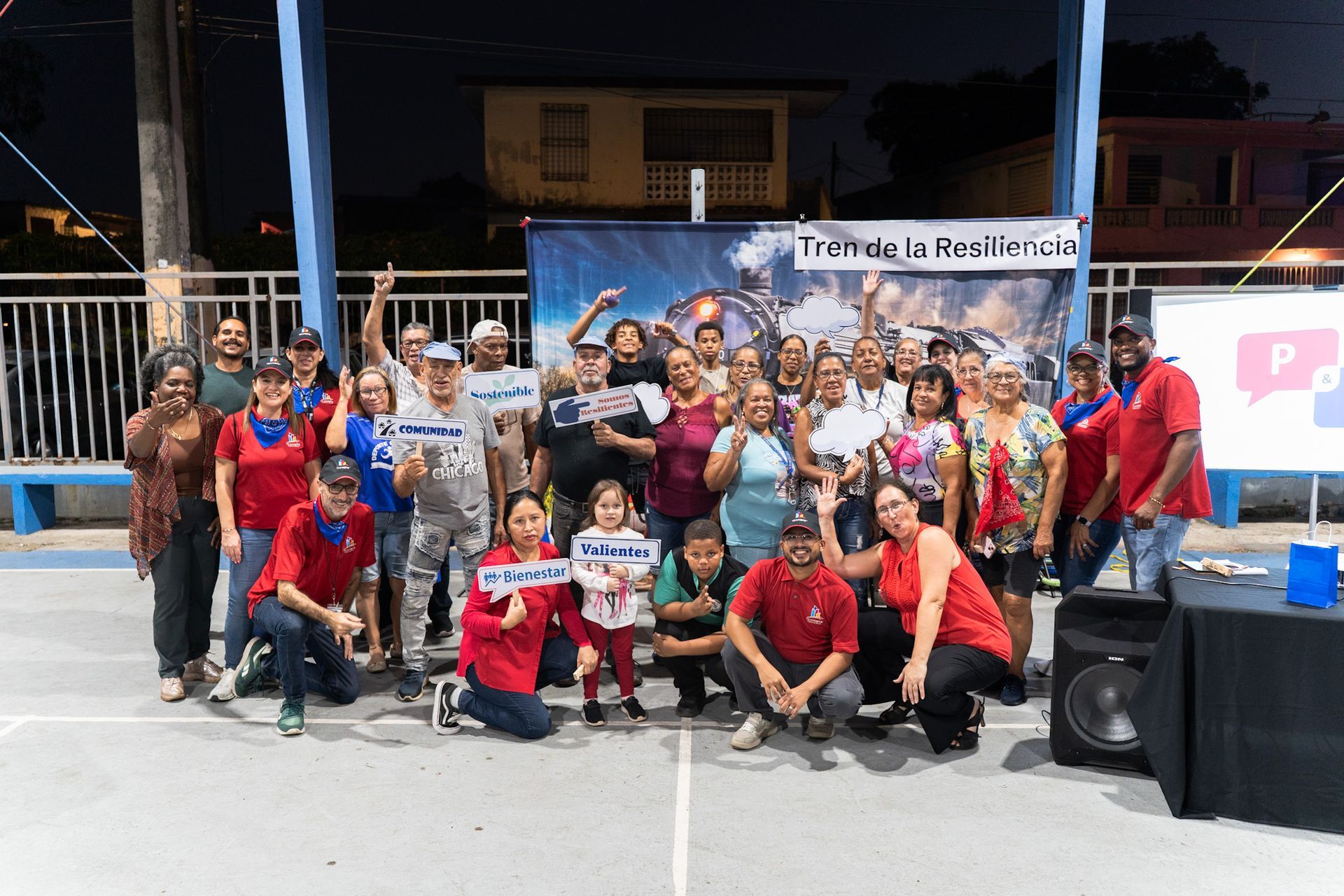
Drawing from their experience leading the Municipal Recovery Planning (MRP) Program and the Whole Community Resilience Planning (WCRP) Program across eight municipalities and ten communities throughout Puerto Rico, they illustrated how planning can become a shared project between local governments and residents.
These efforts were supported by U.S. Department of Housing and Urban Development (HUD) Community Development Block Grant–Disaster Recovery (CDBG-DR) funds, provided to Puerto Rico to help communities plan and implement long-term recovery, resilience, and mitigation following the devastation of recent hurricanes Maria and Irma, and administered by the Puerto Rico Department of Housing (PRDOH).
From Public Hearings to Shared Governance
Kicking off the conversation, moderator Lisa Escobales Jiménez, Ph.D., an IBTS program manager with a doctorate in Business and Management and extensive experience in grants, education, and nonprofit management, framed the panel in the context of post–Hurricane María Puerto Rico, where communities organized relief centers, brigades, and solidarity networks long before formal systems could respond.
“Participation is key to measuring the democratic health of a country,” noted César García García-Conde, an IBTS planner and geographer with a master’s in Urban and Regional Planning, who traced how citizen participation in Puerto Rico has evolved—from early public hearing requirements under the Community Development Block Grant (CDBG) Program, to the Citizen Participation Program and Division of Community Affairs established by Law 81 of 1991, and the Community Advisory Councils included in the 2020 Municipal Code.
“These instruments—community boards, advisory councils, public hearings—were designed to be the bridge between municipal administrations and their neighborhoods,” García explained. “If we strengthen them, they can become the main vehicle for participatory local governance, not just consultation.”
Decentralizing Power, Building Trust
For Brian Rodríguez Acevedo, an IBTS GIS data specialist and professional planner with expertise in coastal erosion modeling and geospatial analysis, decentralization is less about dividing power and more about bringing decisions closer to the people who live with their consequences.
“In many countries, participatory budgets and open platforms have proven that when people participate, decisions are fairer and more efficient,” Rodríguez said. “In Puerto Rico, municipalities can’t always reach every corner—but communities can. Decentralization means trusting their knowledge of the territory and their ability to act quickly during crises.”
Rosa Lozano-Torres, an environmental and community planner with decades of experience working alongside Puerto Rico communities, highlighted that true participation must be continuous, not episodic. “It’s not just inviting people to a public hearing; it’s giving them a formal and permanent seat at the decision-making table,” she said. “After María, it was communities that opened paths, organized food distribution, and cared for their neighbors. When we institutionalize that energy, we strengthen municipal resilience from within.”
Participation Grounded in Data and Dialogue
Turning to practical tools, Heriberto G. Urbano, IBTS Community Engagement Specialist, described the methodologies used in the MRP and WCRP efforts across Puerto Rico.
“The most powerful tool is active listening based on data,” Urbano explained. “Through surveys, interviews, and focus groups, we capture reality from the residents’ perspective. In each community, the same participatory methods were used; however, the approach to community engagement, the way questions were framed, and the manner in which meetings were conducted were adapted to the profile and dynamics of each audience.. This kind of evidence-based participation gives us policies that have both technical rigor and social legitimacy.”
Rodríguez emphasized the role of community forums in sustaining those processes over time. “Forums are not just for sharing information—they help build community,” he said. “When people gather to discuss their future, new leaders emerge, alliances form, and the relationship between municipalities and residents is strengthened. In resilience projects, forums helped communities feel that the plans were not ‘government plans’ but our plans.”
On the technology front, García pointed to open data platforms and community dashboards as key tools for transparent collaboration. “When municipalities, communities, and agencies access the same information, accountability becomes part of the culture,” he said. “Training community leaders to read and use data creates participatory digital literacy. Information stops being exclusive to government and becomes a public good.”
Co-Responsibility: Planning With, Not For
In the final segment, the panel turned to co-responsibility and long-term sustainability.
“Mediation is at the heart of our profession,” Rodríguez said. “A planner should be in the territory, listening and translating community aspirations into public policy language. We’re facilitators, not technical dictators. At IBTS, we always say: we don’t plan from behind a desk—we plan by walking the community.”
Lozano-Torres shared how that approach has reshaped projects on the ground. Residents’ ideas, such as reusing abandoned facilities as resilient community centers, have directly changed proposed actions. “By listening, we modified the projects,” she recalled. “The community felt heard, which generated trust and ownership. For a planner, there’s no better validation than seeing people recognize that the results are theirs.”
Urbano pointed to the Caño Martín Peña Special Planning District as a powerful example of institutionalized co-responsibility. Through Law 489 of 2004, participation was formalized via the G-8, the ENLACE Corporation, and the Community Land Trust—a model that has combined environmental restoration, affordable housing, and community management while preventing displacement. “It shows how participatory planning can become permanent public policy,” he noted.
García and Lozano-Torres summed up the benefits of formally integrating communities into municipal governance: better alignment with real needs, more efficient use of resources, greater transparency, and continuity beyond electoral cycles. “Planning with the people, not for the people, is the only way to guarantee lasting results,” Lozano-Torres said.
From Paper Plans to Living Plans
As the conversation drew to a close, Escobales Jiménez reflected on the central insight that emerged across the eight municipalities and ten communities supported by MRP and WCRP: strengthening municipal governance requires more than laws and regulations. It demands trust, data, and presence in the community.
The IBTS panelists each shared a phrase to capture their vision for the future of planning in Puerto Rico:
- Brian Rodríguez Acevedo: “The future lies in the alliance between municipalities and communities.”
- Rosa Lozano-Torres: “Strengthening local capacities means building resilience from within.”
- César García García-Conde: “Democratic governance begins when every voice counts.”
- Heriberto G. Urbano: “Data, decisions, and dreams must be built together.”
IBTS’ work through the Municipal Recovery Planning Program and the Whole Community Resilience Planning Program demonstrates that when residents have a permanent seat at the table—and when data is collected with empathy and used transparently—resilience plans become living instruments of collaboration and trust. As Lisa Escobales Jiménez, Ph.D., concluded, “Let’s continue planning with empathy, evidence, and collaboration so we can build the resilient Puerto Rico that we all dream about.”
Hear firsthand accounts from residents about the obstacles their communities faced and how IBTS supported their efforts to build stronger, more resilient community in this playlist.
To learn more, visit www.ibts.org/puerto-rico.
IBTS is a national nonprofit organization and trusted advisor and partner to local, state, and federal governments. Our nonprofit mission to serve and strengthen communities is advanced through our services. These include building code services and regulatory expertise; compliance and monitoring; community planning; disaster planning, mitigation, and recovery expertise; energy solutions; municipal services; grants management; market research; program management and oversight; resilience services; solar quality management; and workforce development and training. IBTS’ work is guided by a Board of Directors with representatives from the Council of State Governments (CSG), the International City/County Management Association (ICMA), the National Association of Counties (NACo), the National Governor’s Association, and the National League of Cities (NLC).