
IBTS Appoints Anjuma Goswami Karkera as New CEO

November 29, 2022

Share this article:

A woman with long black hair is smiling and wearing a white shirt.

Karkera succeeds long-term CEO and company co-founder Ashok Goswami


ASHBURN, Va.— Experienced leader and attorney Anjuma Goswami Karkera accepted an appointment as Chief Executive Officer (CEO) of the Institute for Building Technology and Safety (IBTS), a nonprofit services-based organization. She succeeds IBTS cofounder Ashok Goswami, who has served as CEO since 2002. During that time, Goswami oversaw IBTS’ growth from a single office to eight locations nationwide, significantly expanding the company’s offerings for building departments; solar and renewable energy programs; and local, state, and federal government solutions.


“It is with a mix of gratitude and excitement that the Board of Directors announces the succession of our CEO, Ashok Goswami,” announced Ramsey County (MN) Commissioner and IBTS Board Chair Victoria Reinhardt. “As cofounder of IBTS, Ashok’s visionary leadership has contributed to numerous organizational milestones, resulting in sound management, financial strength, and positioning the nonprofit for future growth.”


Goswami will continue in an advisory capacity as IBTS President to ensure an effective transition to Karkera, who seeks to continue growing the organization’s work strengthening communities by making them safer, more resilient, and prosperous.


An influential leader, Karkera’s career has been marked by her ability to rapidly generate and evaluate alternative, achievable solutions; her proven track record fostering interagency collaboration; and her passion for promoting diversity and inclusivity in the workplace. She holds a juris doctorate from the Washington College of Law at American University, most recently serving as Deputy Chief of Staff for the National Geospatial-Intelligence Agency.


“I am honored to join the brilliant and dedicated staff of this unique nonprofit,” Karkera said. “I am an ardent believer in the IBTS business model, which combines public sector credibility with private sector innovation. I look forward to continuing IBTS’ legacy of providing responsive expertise and solutions that help our clients navigate complex challenges, providing better outcomes for communities everywhere.”


“The Board is confident Anjuma will preserve IBTS’ current momentum by aligning her abilities with the existing organization toward a long-term vision for IBTS,” Reinhardt added.


About IBTS

IBTS is a national nonprofit organization and trusted advisor and partner to local, state, and federal governments. IBTS provides building code expertise; federal grants management; disaster planning, mitigation, and recovery expertise; local government solutions; solar quality assurance; and resilience services. IBTS’ work is guided by a Board of Directors with representatives from the Council of State Governments (CSG), the International City/County Management Association (ICMA), the National Association of Counties (NACo), the National Governor’s Association (NGA), and the National League of Cities (NLC).


Media Contact:

Karen M. Johnson
Market Engagement Program Director
O: 571.357.4820 | C: 530.318.5428
kjohnson@ibts.org

September 28, 2026
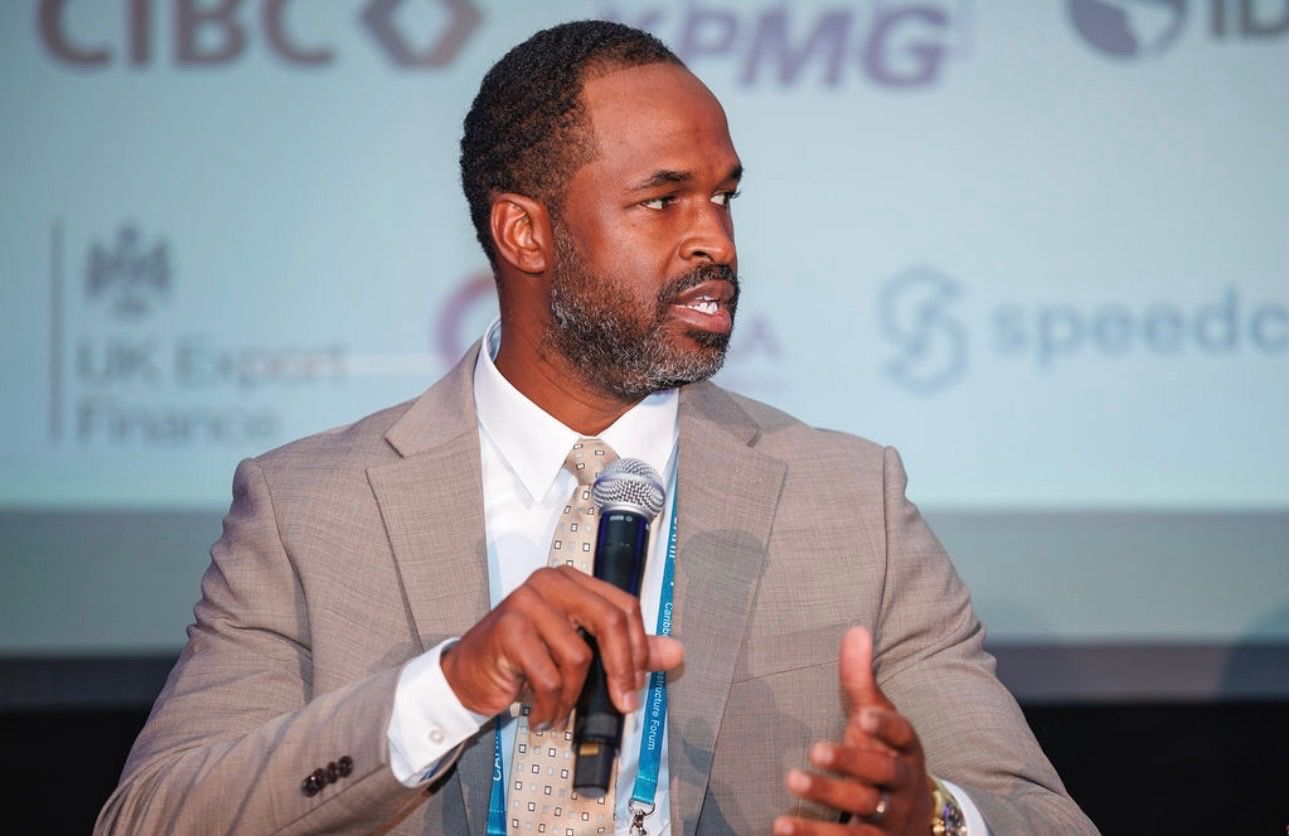
MIAMI, FL— What does it take to deliver resilient housing at scale in the Caribbean? That question was at the center of a panel featuring James Turner, IBTS Director of Federal Programs, during the 10th Caribbean Infrastructure Forum (CARIF) in Miami. The event brought together government officials, developers, investors, infrastructure leaders, utilities, development finance organizations, and public-sector decision makers from more than 30 Caribbean nations and territories to discuss the region's infrastructure priorities and investment needs. James was featured on stage for the "Delivering Affordable and Resilient Housing in the Caribbean" panel discussion, alongside Bermuda housing leader Jeane Nikolai and Caribbean business executive André C. Walcott. The discussion focused on a challenge shared across the region: how to provide safe, affordable housing while strengthening communities against hurricanes, flooding, and other natural hazards. Drawing on IBTS' 5-decade-long experience supporting the US Department of Housing (HUD), as well as our experience in FEMA-funded housing and recovery programs, James emphasized that resilient housing is about much more than construction. Successful programs depend on strong building codes, qualified workers, reliable materials, effective quality assurance, and the systems needed to move projects from funding to implementation. Fellow panelists also shared their interesting perspectives based on their experiences. Jeane Nikolai stressed that homes must be built to withstand the region's climate conditions and backed by dependable warranty terms, noting that a lack of such options can narrow the housing choices available. Resilient construction, she emphasized, is essential to protecting both the homes themselves and the people who live in them. André C. Walcott underscored the importance of consistent building standards to ensure quality construction, along with the need for qualified, well-trained personnel and approved building materials, all of which contribute to safer, better-performing homes. The discussion and audience questions made one point clear: housing shortages are a shared challenge across countries, but the obstacles to meeting housing goals vary from place to place. Funding is a significant concern, but it is not the only driving factor in every case. The conversation reinforced why organizations such as IBTS are needed. Across the Caribbean, governments are investing in housing, infrastructure, and resilience, but many face common implementation challenges, including regulatory requirements, workforce shortages, compliance oversight, and program delivery. IBTS helps bridge those gaps via program management, building code compliance, quality assurance, inspections, resilience planning, and related technical services. Beyond the panel discussion, CARIF provided an opportunity for IBTS to engage directly with government representatives, infrastructure agencies, development institutions, utilities, developers, and private-sector partners working throughout the Caribbean. These conversations highlighted a growing focus on turning funding and policy commitments into real-world projects that strengthen communities and improve long-term resilience. Reflecting on the experience, James noted: "I was honored to participate in discussions with a group of solution-oriented leaders and professionals addressing the critical needs of the Caribbean. I look forward to continuing these important conversations and turning the concepts into actionable implementations." For IBTS, the message from CARIF was clear: resilient housing requires collaboration, practical implementation, and a commitment to quality at every stage. As Caribbean nations continue investing in their future, IBTS remains committed to helping communities transform plans, funding, and policy goals into lasting results. About James Turner: Mr. Turner provides nearly 20 years of professional experience, which includes significant knowledge and experience with manufactured housing standards and regulations. His experience includes technical and regulatory projects, design evaluations, performance assessment, conformity assessment, and technical regulatory research and analysis. About IBTS: With a mission to strengthen communities, IBTS serves as a trusted advisor and partner to local, state, and federal governments in advancing economic development. Its services ensure the effective planning, implementation, and evaluation of renewable energy projects and federally funded energy and sustainability programs—optimizing performance, reducing risk, and promoting the efficient use of public funds. Beyond its expertise in solar quality assurance, IBTS’s Puerto Rico office provides services in federal fund management; disaster planning, mitigation, and recovery; municipal planning; and resilience strategies. As a nonprofit organization, IBTS is guided by a Board of Directors with representatives from the Council of State Governments (CSG) , International City/County Management Association (ICMA) , National Association of Counties (NACo) , National Governors Association (NGA) , and the National League of Cities (NLC) . For more information, visit www.ibts.org .
September 18, 2026
IBTS supports regional collaboration on affordable resilient and code complaint housing
July 21, 2026
The Institute for Building Technology and Safety has completed energy-efficiency, health and safety improvements in 103 Puerto Rico homes through a federally financed weatherization program, exceeding its goal of 100 households in about six weeks. The nonprofit organization, known as IBTS, managed operations and coordinated the latest phase of the U.S. Department of Energy’s Weatherization Assistance Program in collaboration with the Puerto Rico Department of Economic Development and Commerce’s Energy Public Policy Program. Weatherization programs are intended to reduce household energy costs by making homes more efficient while addressing conditions that can affect residents’ health and safety. The Puerto Rico initiative prioritized low-income families, older adults and people with disabilities, according to IBTS. The organization did not specify the individual improvements made in each home but said the work was intended to increase comfort, improve living conditions and strengthen resilience. IBTS handled project management, inspections, quality assurance, regulatory compliance, document control and staff training, the organization said. The project also reported a 98% satisfaction rate among participants. “This program demonstrates what is possible when federal resources are translated into practical, measurable improvements for families and communities,” said Agnes Crespo-Quintana, IBTS’s Caribbean regional director. Alvin Miranda-Colón, manager of the Weatherization Assistance Program, said the initiative was intended to make energy more affordable while supporting sustainability and community resilience. IBTS said the project required coordination among government officials, contractors, auditors, inspectors, technology providers and participating communities. The organization said that work also developed procedures, trained personnel and expanded institutional capacity that could be used in future federally financed energy, housing and infrastructure programs. Judelly Hernández-Morales, the IBTS project manager, said cooperation between the public and private sectors helped translate federal funding into improvements for participating households.